By Travis, Co-Founder, Mineral City AI
Learn why legacy sampling fails modern pharma, medtech, CPG, and supply chain operations—and how AI-powered sealed-package verification is transforming product integrity, reducing risk, and strengthening global QA workflows.
Why Sampling Fails Modern Supply Chains (And What AI Fixes)
Across high-value and regulated industries—including pharmaceuticals, medical devices, CPG, food and beverage, and nutraceuticals—quality teams still rely on destructive sampling to validate product integrity. But today’s supply chains are more complex, global, and high-risk than ever before.
Sampling cannot keep up.
This blog explains the hidden cost of sampling, why traditional QA is failing, and how AI-driven verification is becoming the new standard for safety, compliance, and efficiency.
Sampling Was Never Designed for Today’s Supply Chain Complexity
Sampling remains rooted in a decades-old assumption:
If a few units look good, the whole batch is likely fine.
This assumption breaks down under modern conditions:
- Globalized manufacturing
- Increased product variation
- Sophisticated counterfeiting
- Higher regulatory expectations
- Multi-tiered suppliers
- Rapid production timelines
Legacy QA processes have not evolved at the speed of industry risk.
Sampling only reveals what’s inside the units you open—not the ones that matter most.
The Hidden Costs of Sampling
1. Operational Waste
Sampling destroys product—often top-tier, high-cost SKUs. Across pharmaceuticals and medical devices, this results in:
- Waste of sterile or sensitive goods
- Loss of high-value inventory
- Shrinkage that compounds across batches
This is not sustainable when margins depend on precision.
2. Labor Inefficiency
Manual sampling requires:
- Technicians
- Time
- Environmental controls
- Documentation
A single verification cycle can take 30–90 minutes.
With AI-assisted inspection, the same verification can be completed in under one minute.
3. False Confidence in Batch Integrity
Sampling provides an illusion of certainty.
Outlier issues rarely appear in a 2–5% sample set.
This is where counterfeit, contamination, and fill-level errors hide.
4. Subtle Defects Go Undetected
Most internal inconsistencies are not visible externally:
- Density variations
- Micro-defects
- Internal component misalignment
- Foreign particles
- Powder stratification
- Seal failures
These almost never appear in the sample selected.
5. Elevated Counterfeit and Diversion Risk
Sampling does not detect counterfeit product if:
- External packaging is intact
- Labels are forged
- Internal composition is altered
Counterfeiters evolve faster than legacy QA.
6. Delays in Release and Compliance
Batch release slows when sampling becomes a bottleneck.
In regulated industries, speed and accuracy must coexist.
7. Regulatory Pressure Is Increasing
Global regulators (FDA, EMA, MHRA, APAC regulators, customs agencies) increasingly expect:
- Stronger traceability
- Verification beyond external packaging
- Tighter release criteria
Legacy systems cannot meet what the future requires.
Why AI Is the Only Scalable Solution
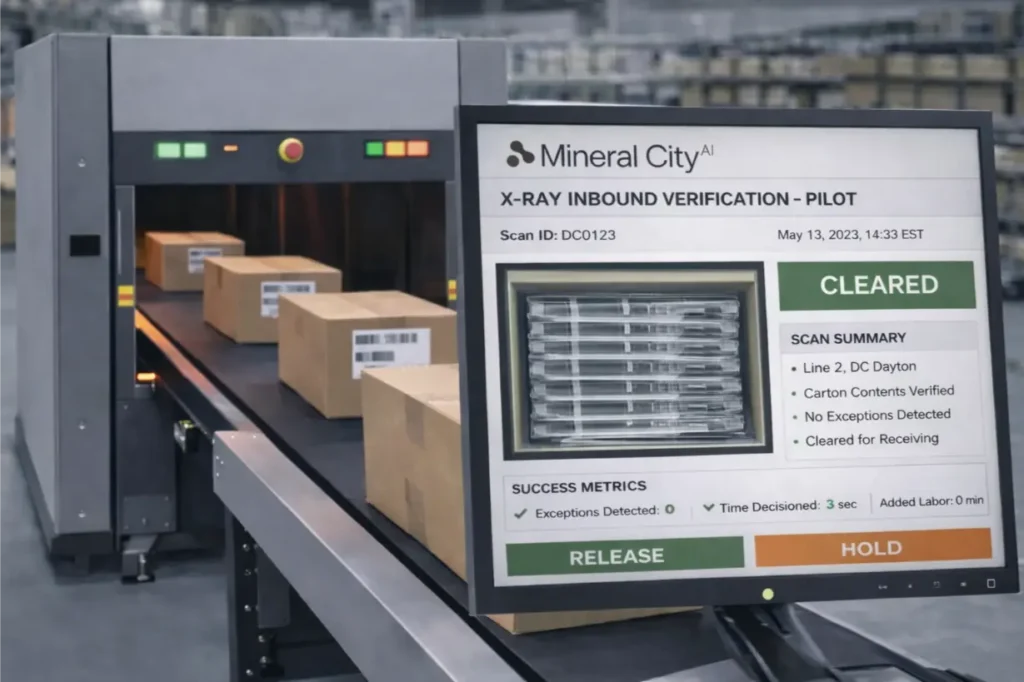
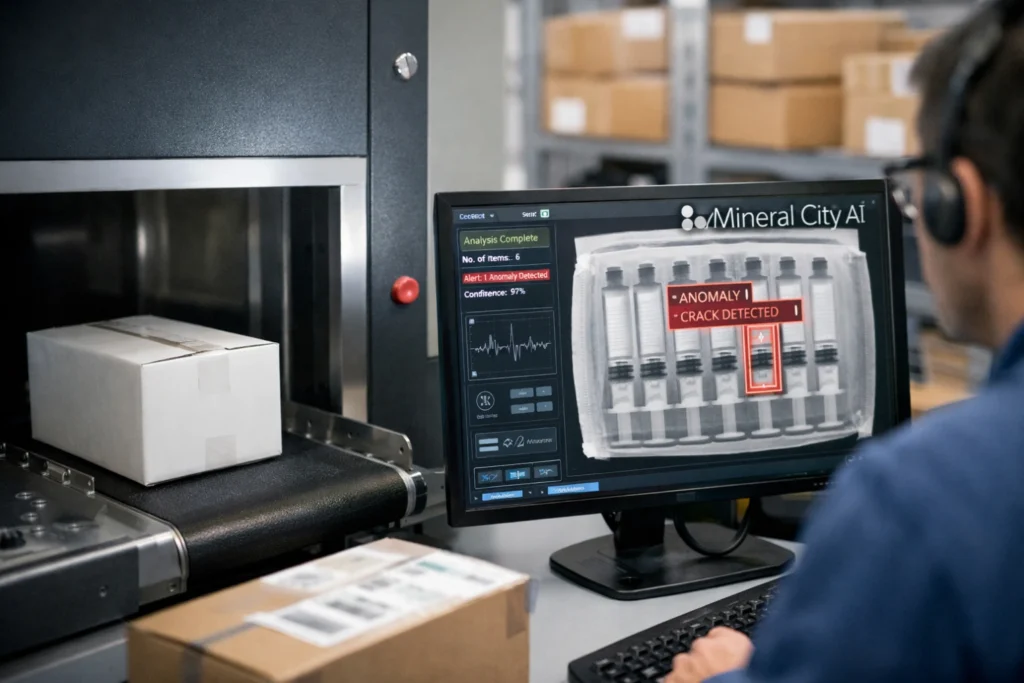
AI-assisted radiographic inspection eliminates the limitations of sampling and enables non-destructive sealed-package verification at scale.
XR Vision™, our radiographic AI engine, was built to:
- Identify internal signatures unique to each product
- Compare units at high speed
- Detect anomalies invisible to human inspection
- Analyze every unit—or every case
- Reduce sampling by up to 90%
- Deliver objective, repeatable pass/fail outcomes
- Preserve sterility by keeping packaging intact
AI does not replace QA.
AI augments QA with precision, consistency, and intelligence.
How XR Vision™ Redefines Product Integrity
Non-Destructive Verification
Inspect internal structure without opening a single unit.
Batch-Level Insight
Evaluate entire shipments—not just 5%.
Rapid Throughput
Verification times drop from 30–90 minutes to under 1 minute.
Objective Decisions
AI is not biased, fatigued, or inconsistent.
Scalable Accuracy
Models learn and improve over time.
Cross-Industry Applicability
Pharma, medtech, CPG, nutraceuticals, beverages, and specialty goods all benefit.
How Industries Benefit: Practical Examples
Pharmaceuticals
- Confirm vial content uniformity
- Identify tampering or diversion
- Flag density or fill-level discrepancies
- Preserve sterility with sealed-unit inspection
Medical Devices
- Validate internal components without opening sterile kits
- Detect misalignment invisible to external review
CPG, Food & Beverage
- Detect fill inconsistencies
- Identify foreign objects
- Verify formulation uniformity
Nutraceuticals
- Confirm powder density and blending consistency
- Validate capsule count and fill
Customs & Government
- Screen high-risk shipments rapidly
- Strengthen compliance and authenticity checks
Why This Moment Matters
Global supply chains have never been more strained or more scrutinized.
Accuracy, traceability, and speed have become non-negotiable.
AI-driven verification solves all three.
This is why leading manufacturers, regulators, and integrators are moving toward intelligence-based QA systems—and why destructive sampling will become obsolete.
Mineral City AI’s mission is to accelerate that transition.
Closing Thoughts
Sampling will not support the next decade of product integrity.
The future belongs to systems that can verify, detect, and validate without destruction or delay.
XR Vision™ enables that future now.
For manufacturers, partners, and investors who understand the urgency of modernizing QA, the opportunity is clear:
Intelligence will define the next generation of supply chain trust.
Mineral City AI is building the foundation.
If you’re ready to explore AI-powered product integrity, we welcome the conversation.