The uncomfortable truth: labels don’t prove what’s inside
For the past decade, the industry has invested heavily in serialization, track-and-trace, and tamper evidence. These systems have raised the bar for supply chain verification. They have also created a subtle but important misconception: that a validated label equals a validated product.
It does not.
A barcode can be copied. A serial number can be cloned. A carton can be swapped. A shipment can be diverted. In modern supply chains spanning 3PLs, mixed-parcel environments, and global handoffs, external identifiers alone cannot confirm what is physically inside a sealed package.
The next evolution in supply chain trust will not come from more labels. It will come from the ability to verify contents non-destructively, without opening the box or disrupting the workflow.
Why the gap is becoming material
Three forces are converging to make this gap operationally significant.
Compliance pressure is shifting toward demonstrable assurance
U.S. Food and Drug Administration & DSCSA now requires trading partners to verify product at unit level, maintain auditable transaction histories, and investigate suspect or illegitimate product events. Regulators can trace a product to a specific lot and location.
What DSCSA does not require, and what serialization cannot provide, is confirmation that the product inside the package matches the identifier on the outside. When the FDA initiates a suspect product investigation, the process still ends with physical inspection. Serialization establishes a digital record. It does not validate the physical contents against that record.
Freight fraud and diversion are increasing in complexity
Supply chain risk is no longer limited to counterfeit manufacturing. Cargo theft in the United States has shifted to more costly, sophisticated events: product rerouted, substituted, or relabeled during transit in ways that produce a sealed package that looks correct on the outside.
Organizations like the Partnership for Safe Medicines continue to highlight patterns of diversion, suspicious lanes, and vulnerabilities in logistics networks.
CargoNet reported that estimated losses from cargo theft in the U.S. and Canada surged to approximately $725 million in 2025, representing a 60% increase from 2024.
Diversion events that surface as a quality complaint, a patient harm report, or an FDA investigation do not appear in cargo theft statistics. They appear in recall investigations. By then, the product has already moved through distribution.
Enforcement data reflects the scale of the issue
Seizures by U.S. Customs and Border Protection consistently demonstrate the volume and value of illicit or non-compliant goods entering supply chains.
These are lagging indicators. The leading indicator is the growing number of organizations asking a more direct question:
How do we confirm authenticity and integrity without breaking the seal?
From traceability to verification
Traceability and verification serve different roles.
Traceability answers: Where did it come from? Who handled it? What does the record show?
Verification answers: Is this physically correct, complete, and intact right now?
In high-risk environments, the most costly failures occur when those two answers diverge.
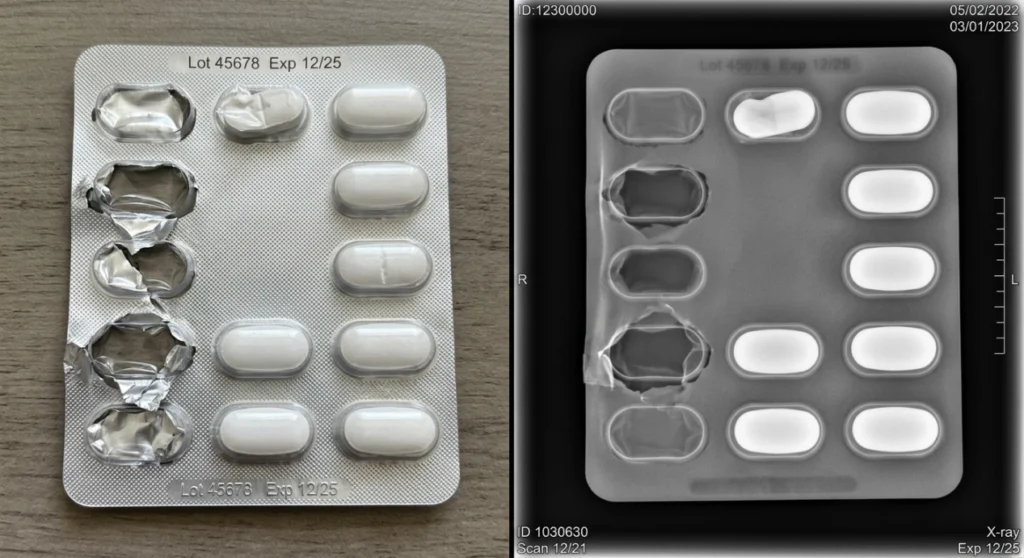
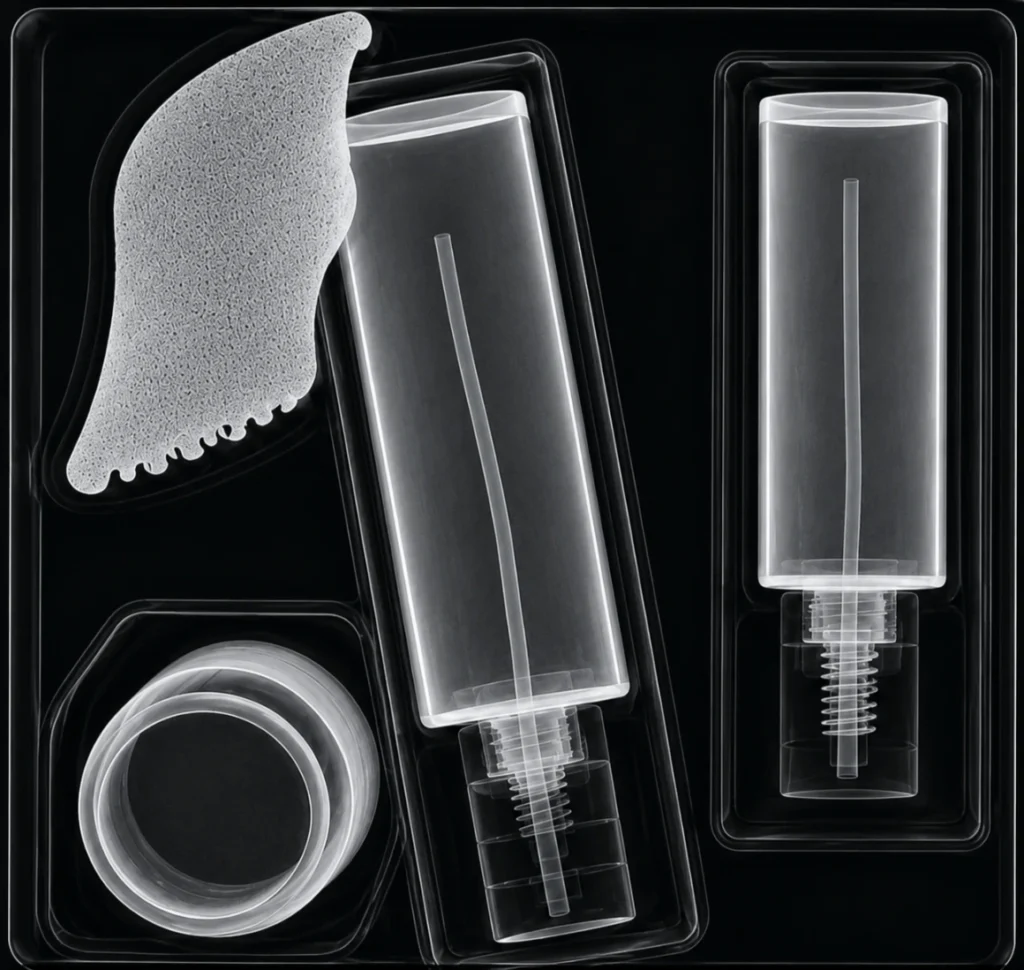
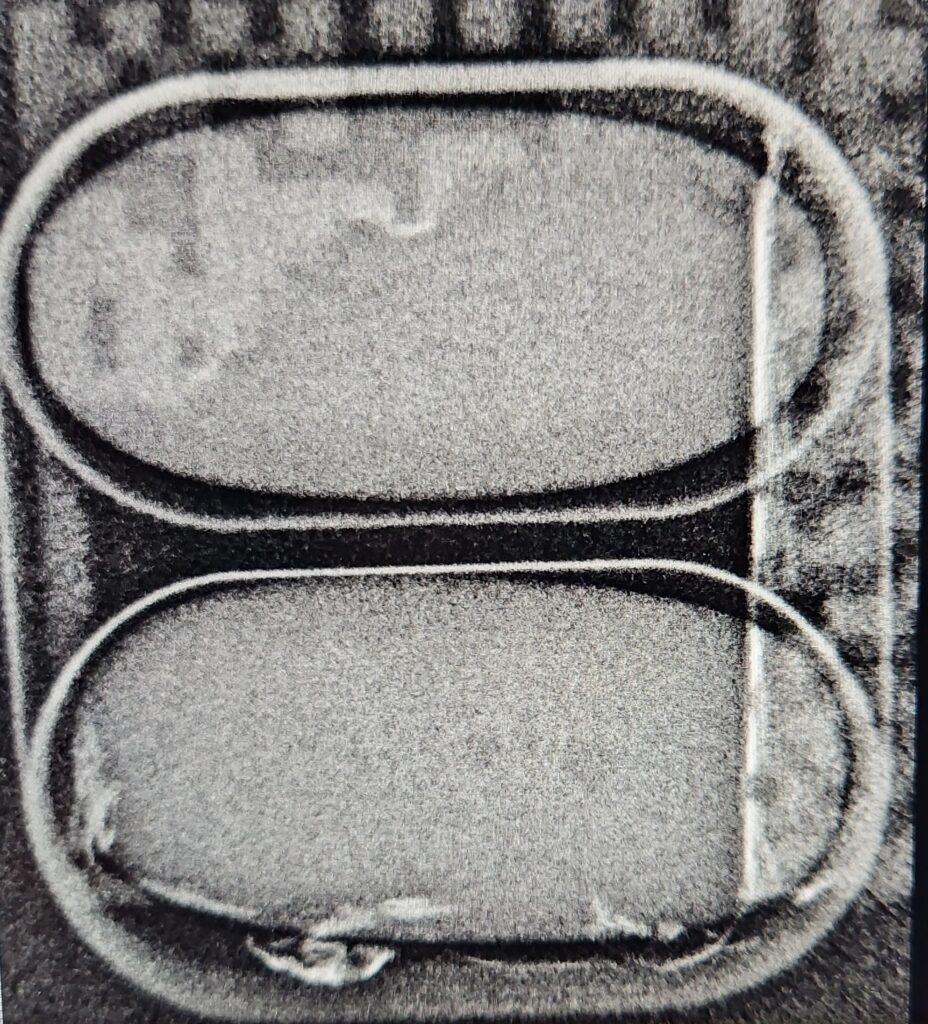
This is where a new standard is emerging: the ability to confirm, non-destructively, that the physical contents of a sealed package match its intended configuration.
Some organizations are beginning to refer to this as “proof-of-contents” verification because it moves beyond external identifiers toward evidence-based validation of what is physically inside the package.
What “proof-of-contents” looks like in practice
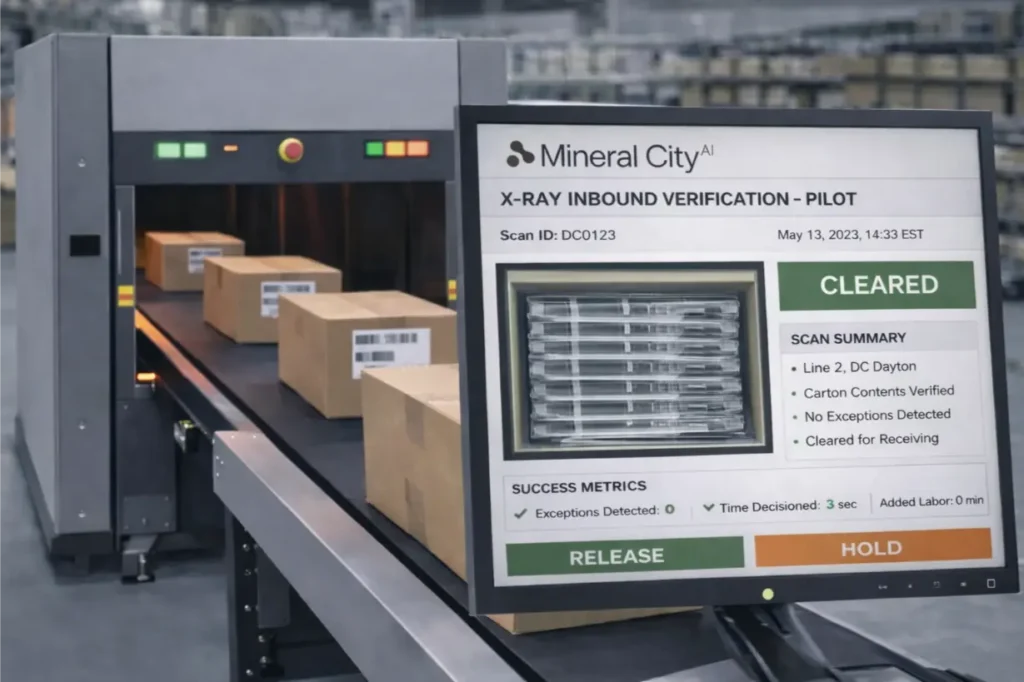
At an operational level, “proof-of-contents” introduces a verification layer that works within existing workflows:
- Non-destructive inspection: verify sealed packages without compromising sterility or temperature control
- Content confirmation: ensure completeness, configuration, and presence of critical components
- Anomaly detection: identify discrepancies that would otherwise pass external inspection
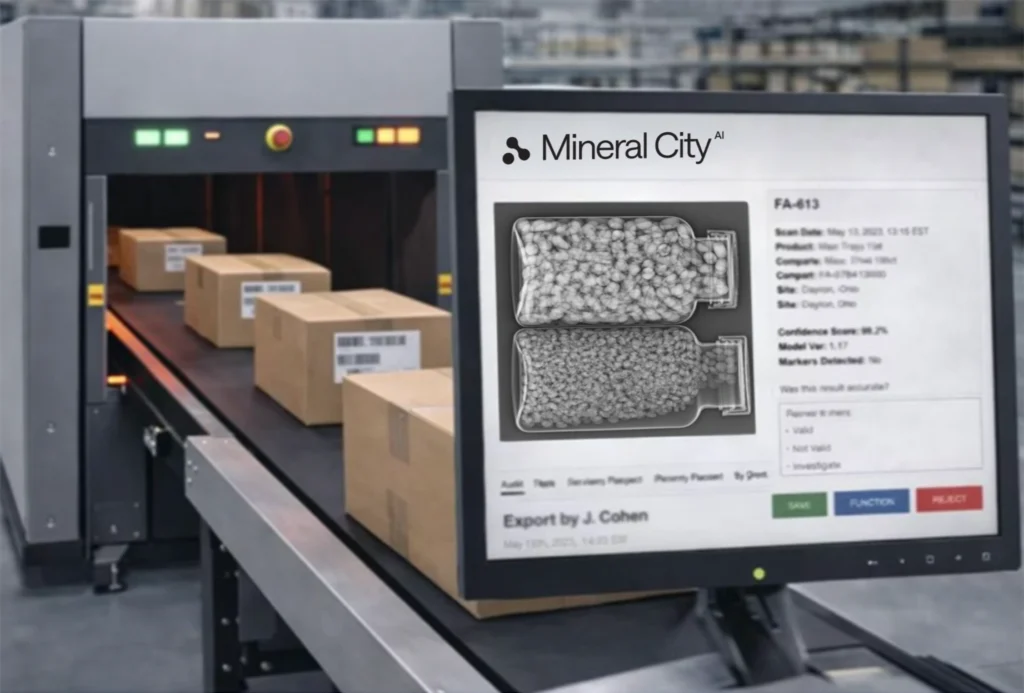
- Auditable evidence: generate time-stamped, image-backed records for QA, compliance, and investigations
The impact is not just detection. It is prevention.
Issues can be identified:
- After packaging and/or before distribution
- During inbound/outbound distribution at any step in the value chain
- Before downstream investigations
- Before escalation into recalls or compliance events
- During and after recall and compliance events to ensure only impacted units are identified
This shifts verification from a reactive process to a proactive control point.
Where this matters most
Pharmaceuticals
Sterile injectables, oncology, cold-chain shipments, where a single non-conforming unit can trigger a Class I recall. DSCSA compliance establishes a digital record for each unit; “proof-of-contents” verification provides evidence that the physical product matches it. Particularly relevant for suspect product investigations and pre-distribution quality release.
Medical devices
Surgical kits, implants, and combination products where a missing or substituted component creates patient safety risk, regulatory liability, and recall exposure. Kit completeness verification at pack is faster and less costly than investigation after distribution.
Consumer goods & luxury
High-value SKUs where diversion and grey-market substitution occur during transit instead of at the point of manufacture. External inspection at origin misses this type of diversion. Verification at outbound and inbound handoffs does not.
Food & beverage
Fill consistency, foreign object detection, and export compliance in environments where X-ray infrastructure often already exists. The gap is not equipment: it is AI-driven interpretation at scale, moving from manual review of flagged images to systematic, consistent content verification across every unit.
Government and customs
Import/export verification where the objective is not only to intercept non-compliant goods but to clear compliant shipments faster. Reducing reliance on physical inspection at the border lowers per-unit inspection costs, reduces lead times, and increases throughput without reducing detection rates.
In each case, the challenge is the same: confirming internal integrity without disrupting operations.
The 2026 shift: verification built into the workflow
The most common adoption mistake is treating verification as an exception.
In practice, the organizations seeing the most value are embedding it at three points:
- Inbound: validation at receipt before storage or redistribution
- Inline: immediate post-packaging checks for process control
- Outbound: verification before shipment leaves the facility
This approach transforms verification from a forensic tool into a continuous control mechanism.
What we believe at Mineral City AI
Supply chain systems have become very good at confirming identity, but they are not designed to confirm contents. That gap is becoming harder to ignore and harder to defend.
XR Vision was built to close it: non-destructive verification of sealed packages, with an auditable, image-backed record that can support quality decisions, compliance documentation, and operational investigations.
This does not replace existing traceability infrastructure. It validates what those systems cannot see.
If you are responsible for quality, compliance, security, or operational integrity, the question is direct:
Where in your supply chain are you still trusting the label when you need validation of what is inside?
Where the standard is moving
Expectations around product integrity are increasing. Organizations will not only be asked to trace products, but to demonstrate that what moved through the supply chain was physically correct at key control points.
External identifiers establish what a product is supposed to be. “Proof-of-contents” verification helps establish that it actually is.
That distinction is becoming material, and it will not remain optional. It will become standard.
For teams evaluating next-generation product integrity
We provide periodic insights on deployments, validation approaches, and how leading organizations are extending existing verification systems.